
Artificial Intelligence (AI) has already disrupted many industries — but what about blue-collar work? In Singapore, thousands of workers across logistics, food & beverage, cleaning, delivery, and construction are asking a critical question: will AI replace my job?
Let’s break down the real impact of AI on blue-collar jobs in Singapore — and what workers can do to stay ahead.
The short answer: yes and no.
AI is automating specific repetitive or time-consuming tasks, but many blue-collar roles still rely heavily on physical presence, human judgment, adaptability, and interpersonal skills — areas where machines fall short.
For example:
Cleaning robots can handle basic floor cleaning, but not deep-clean restrooms or navigate complex environments.
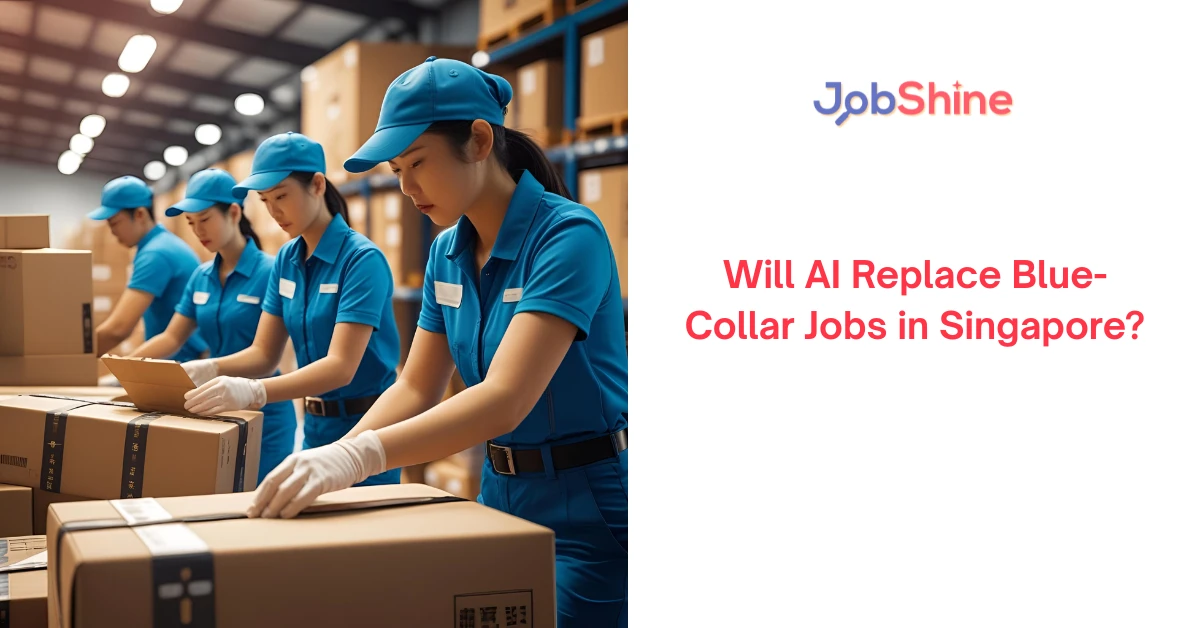
Automated warehouses still need human supervisors, pickers for delicate items, and equipment maintenance staff.
Food preparation robots exist, but kitchens continue to rely on cooks and service staff for speed, taste, and flexibility.
Delivery drones are being tested, but human riders remain the backbone of Singapore’s last-mile delivery ecosystem.
AI is changing how work is done — not eliminating the need for workers.
Jobs that require the following are unlikely to disappear anytime soon:
Movement through real-world environments (cleaning, delivery, facilities work)
Direct interaction with people (F&B, retail, customer-facing roles)
Safety awareness and emergency handling (construction, logistics, site operations)
On-the-spot decision-making and flexibility
These roles are especially vital in Singapore’s service-driven, high-density economy.
Singapore’s focus is augmentation, not replacement.
Through initiatives like SkillsFuture, WSQ programmes, and the Smart Nation push, blue-collar and non-PMET workers are encouraged to:
Learn how to operate smart machines and automated tools
Use digital apps to improve productivity and communication
Get certified in commonly used workplace technology (POS systems, inventory tools, cleaning robots, scheduling apps)
The goal is to help workers stay employable as technology evolves.
The smartest move is to embrace technology, not fear it.
Practical steps include:
Learning basic digital skills (mobile apps, QR systems, workplace communication tools)
Taking short, subsidised training courses
Staying open to new tools and responsibilities at work
Choosing employers that offer on-the-job training and tech exposure
Workers who adapt are often more valuable, not less.
JobShine is built for Singapore’s modern blue-collar workforce. We work only with verified employers who still need skilled, reliable people — alongside technology.
From kitchen helpers and warehouse packers to delivery riders and cleaning staff, JobShine connects workers to roles that remain in demand and relevant in 2026 and beyond.
AI is transforming blue-collar work in Singapore — but it isn’t replacing people. It’s reshaping tasks, workflows, and skill requirements.
The future belongs to workers who are willing to learn, adapt, and grow with technology.
Looking for secure, verified blue-collar jobs in Singapore?
Find your next opportunity on JobShine.sg — Singapore’s trusted platform for blue-collar jobs.

