
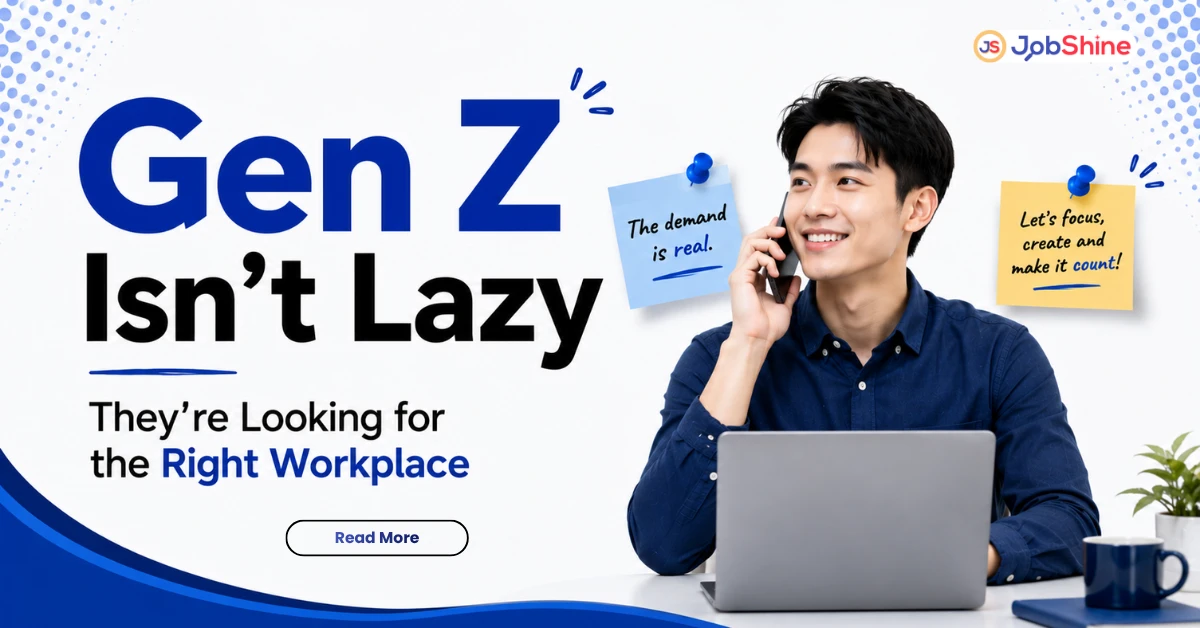
For years, every new generation entering the workforce has been labelled as "less hardworking" than the one before.
Millennials were once criticised for changing jobs too often. Before them, Generation X was called the "slacker generation." Today, Gen Z faces similar stereotypes — being described as entitled, unmotivated, or unwilling to work hard.
But is the problem really Gen Z?
Many organisations assume that employee motivation begins after onboarding.
In reality, motivation starts much earlier — during the hiring process.
When job expectations don't match reality, employees quickly become disengaged. No amount of team-building activities, free coffee, or wellness programmes can fix a role that was never aligned with what the employee was looking for.
Successful recruitment isn't about convincing every candidate to join your company. It's about finding candidates whose goals genuinely match what your organisation can offer.
You can't motivate someone into the wrong role. You can only find the right person for the right one.
Contrary to popular belief, Gen Z isn't avoiding work.
They're looking for workplaces that offer:
These expectations aren't unreasonable — they reflect a workforce that grew up in a rapidly changing digital world and wants transparency from employers.
Gen Z doesn't want less from work. They want work that's worth showing up for.
Many companies focus heavily on attracting candidates with attractive job advertisements.
But the interview process shouldn't simply be a sales pitch.
Instead, employers should ask:
Being transparent about workload, career progression, company culture, and expectations creates better long-term employee retention than overselling the position.
The best hire isn't the one you convinced to join. It's the one who genuinely wanted to.
Gen Z employees don't expect perfection from managers.
They expect communication.
Regular feedback, clear direction, recognition for good work, and opportunities to contribute often matter more than traditional management styles based solely on authority.
Companies that invest in coaching instead of micromanaging are more likely to retain younger talent.
Today's hiring market is increasingly competitive.
Candidates evaluate employers just as carefully as employers evaluate candidates.
This means recruitment should focus on mutual fit — not simply filling open positions as quickly as possible.
A better hiring decision today can reduce turnover, improve employee engagement, and lower recruitment costs in the long run.
At Jobshine, we believe successful hiring starts with better matching.
Our platform helps employers:
Recruitment isn't just about hiring faster. It's about hiring people who are more likely to stay, contribute, and grow with your organisation.
Instead of asking "Why isn't Gen Z motivated?" — a better question may be:
"Are we creating workplaces where people want to do their best work?"
In the future of recruitment, the best employers won't necessarily be those offering the highest salaries.
They'll be the ones offering the strongest alignment between people, purpose, and opportunity.
Partner with Jobshine to build a stronger, more stable team: www.jobshine.sg
#BlueCollar #BlueCollarWorkers #Hiring #Recruitment #SingaporeJobs #SingaporeRecruitment #TalentAcquisition #Workforce #EmployerBranding #HR #HumanResources #HiringStrategy

